
Celebrity
Who Is Jeffrey Craig LaBeouf? The Full Story Of Shia LaBeouf’s Father, Trauma, And Life In Exile

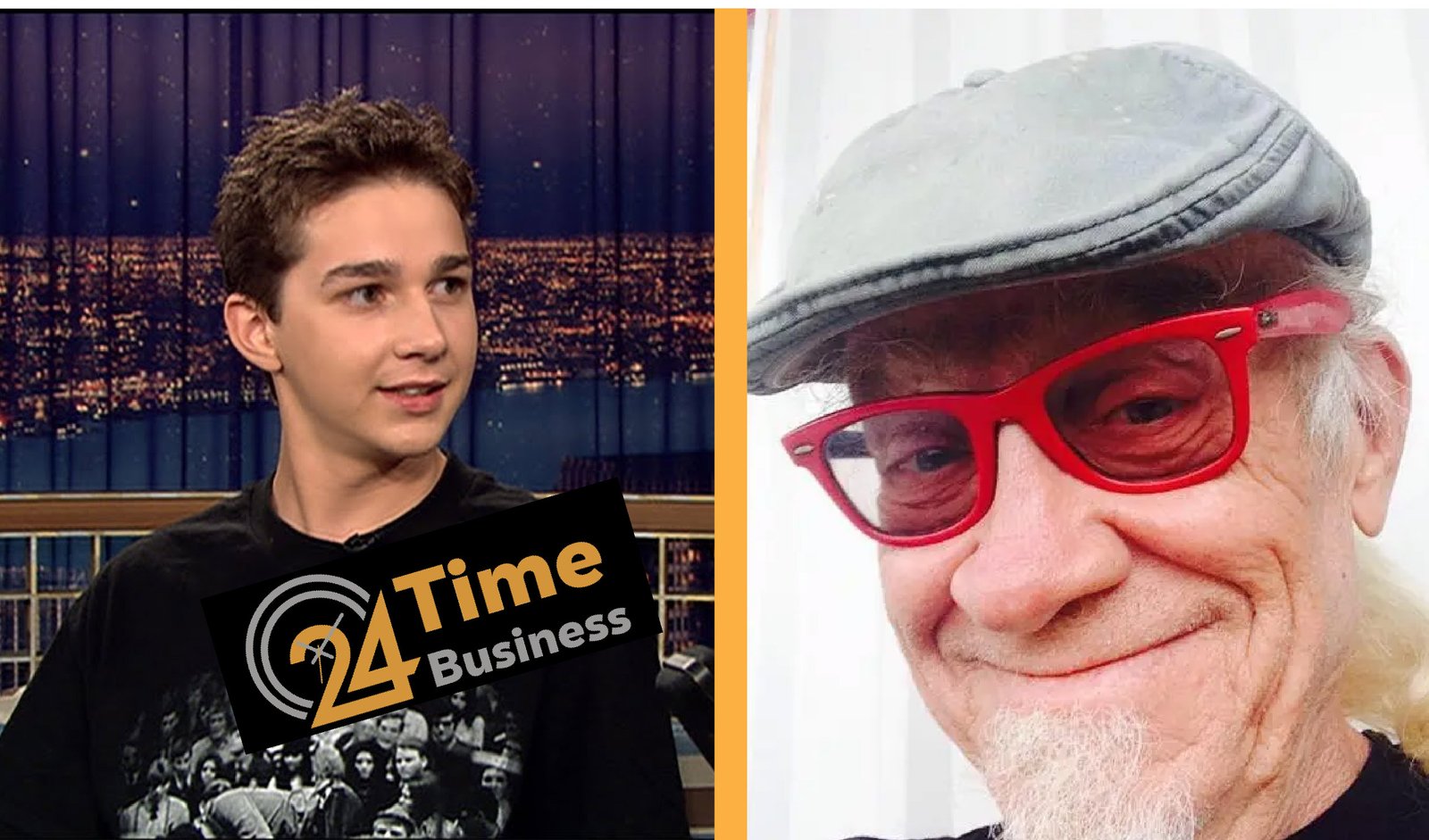
Jeffrey Craig LaBeouf is a name that continues to attract public curiosity, not because he is a celebrity in his own right, but because of the complex and painful impact he had on the life of his famous son, Hollywood actor Shia LaBeouf. People search for Jeffrey today to understand the man behind the troubled childhood that shaped Shia’s emotional world, his artistic career, and the deeply personal story portrayed in the film Honey Boy. Jeffrey’s life has been defined by war trauma, addiction, crime, emotional volatility, and long periods of instability that eventually pushed him into self-exile in Costa Rica. His struggles with heroin, cocaine, alcoholism, and PTSD affected every part of his life, including his marriage, his ability to parent, and his place in society.
Yet Jeffrey’s story is more than a record of crimes and failures. It is also the story of a man shaped by the devastating consequences of the Vietnam War, a man who tried to express himself through clowning and performance art, and a father whose presence—whether destructive or artistic—played a major role in shaping Shia LaBeouf’s talent, trauma, and creative identity. This article explores Jeffrey’s entire life journey: his early years, his wartime experiences, his addiction, his criminal history, his complicated fatherhood, his escape to Costa Rica, and his current relationship with his son. Understanding Jeffrey is essential to understanding the emotional roots of one of Hollywood’s most complicated actors.
Bio Details: Jeffrey Craig LaBeouf
| Personal Information | Details |
|---|---|
| Full Name | Jeffrey Craig LaBeouf |
| Date of Birth | 1 February 1948 |
| Age | 76 years (as of 2024/2025) |
| Place of Birth | Not publicly disclosed (USA) |
| Nationality | American |
| Ethnicity | Cajun French |
| Religion | Christian |
| Occupation | Vietnam War Veteran, Clown Performer, Artist |
| Known For | Father of actor Shia LaBeouf |
| Marital Status | Divorced |
| Ex-Wife | Shayna Saide (artist, dancer, jewelry designer) |
| Children | Shia Saide LaBeouf |
| Current Residence | San Juan de Dios, Costa Rica |
| Notable Issues | PTSD, addiction struggles, criminal convictions, fugitive status |
| Height | 6 ft 2 in (1.88 m) |
| Hair Color | Grey |
| Eye Color | Dark Brown |
Early Life and Cajun French Background
Jeffrey Craig LaBeouf was born on 1 February 1948, though the exact place of his birth has never been publicly confirmed. He is of Cajun French ancestry, a culture known for its deep artistic traditions, emotional intensity, and strong storytelling roots. Jeffrey grew up in an unstable environment, influenced heavily by generational addiction. He has openly said that both of his parents were alcoholics, and his mother also struggled with prescription pill dependency. This early exposure to dysfunction shaped his emotional world long before he entered adulthood.
His childhood environment was unpredictable and lacked structure, which contributed to the personality traits he carried throughout life: impulsiveness, emotional intensity, a need for artistic expression, and an inability to handle stability or authority. Competitors often miss an important detail—Jeffrey was shaped by a long family history of alcoholism, and much of his adult life reflected the unresolved trauma inherited from his parents. The emotional instability of his early home set the stage for the self-destructive patterns he later passed on to his son.
Vietnam War Service and PTSD Effects
Jeffrey’s life changed dramatically when he joined the military and served in the Vietnam War. Completing three tours in Vietnam is extremely rare and emotionally devastating, and it left a deep psychological mark on him. He spoke in interviews about experiencing traumatic events that permanently affected his mental health. The constant exposure to violence, death, and fear created intense emotional wounds that he never received proper treatment for.
When Jeffrey returned home from Vietnam, he began showing severe symptoms of PTSD. These symptoms included violent flashbacks, unpredictable mood swings, paranoia, and episodes of extreme fear. One of the most disturbing incidents was described by Shia LaBeouf, who said that during a flashback, his father once pointed a gun at him, confusing his young son for a wartime threat. Incidents like these created long-lasting emotional scars for Shia, and they became central to Shia’s understanding of trauma as he grew older.
Jeffrey’s wartime experiences shaped his entire adult life. They fueled his addictions, intensified his emotional breakdowns, and created patterns of violence that he often could not control. Without therapy or proper support, he struggled to move forward, and the trauma of Vietnam continued to echo throughout his relationships, decisions, and behavior.
Addiction, Trauma, and Personal Downfall
After returning from war, Jeffrey fell deep into addiction. His substance abuse followed a clear pattern: alcohol first, then cocaine, and finally heroin. His drug use was often his way of coping with the PTSD he did not fully understand. As the addiction grew more severe, Jeffrey became increasingly unpredictable and volatile, especially during withdrawal periods. His addiction consumed his personal life and deeply damaged his marriage and his role as a father.
One of the most disturbing parts of Shia’s childhood was being introduced to cigarettes and marijuana by his father at only ten years old. Shia has spoken openly about how he “became the parent” in the relationship as he watched Jeffrey go through heroin withdrawal, violent mood swings, and emotional breakdowns. Jeffrey frequently attended Alcoholics Anonymous meetings, and he often brought Shia with him, exposing him to adult emotional struggles long before he was ready.
Jeffrey himself has admitted in interviews that he was a “mess” during Shia’s early childhood. His addiction left him unable to maintain any form of stability or responsibility, and it contributed to the emotional chaos that defined the LaBeouf household. The combination of trauma and addiction slowly destroyed his ability to function, and his family suffered the consequences.
Life as a Clown and Struggling Artist
Despite his troubled personal life, Jeffrey was driven by a deep desire to express himself through art. After leaving the military, he pursued a career as a clown—a decision that surprised many but reflected his genuine passion for performance. He worked as a circus clown, rodeo clown, theater clown, and street clown, performing in major cities like Los Angeles, New York City, San Francisco, and Santa Monica. He also juggled, painted, and wrote poems, believing that clowning was a sacred form of emotional expression.
Jeffrey’s artistic instincts heavily influenced Shia’s own talent. Shia’s early comedy, physical humor, and improvisation came directly from the lessons his father taught him. However, Jeffrey’s life as a performer was also marked by instability. He supported himself through odd jobs, including selling hot dogs and performing for small crowds to survive. He often struggled to balance his artistic dreams with the emotional and financial challenges caused by his addictions.
This emotional conflict—between being an artist and being a troubled father—became one of the defining themes of Jeffrey’s life and later became a central theme in Honey Boy. Jeffrey saw art as his salvation, yet his personal demons constantly pulled him away from the stability needed to pursue it fully.
Criminal Record and Prison Years
Jeffrey’s criminal history is one of the most controversial aspects of his life. In 1981, he was arrested and charged with kidnapping, assault with a deadly weapon, and the attempted rape of a minor. Jeffrey claimed he was blackout drunk at the time and had no memory of the incident. He ultimately entered a plea of “no contest”, and he was sentenced to three years in prison, serving from 1981 to 1983.
His time in prison left its own psychological mark. Jeffrey carried shame, guilt, and emotional confusion long after his release. However, his criminal behavior did not end there. In 2000, during Shia’s time on the Disney show Even Stevens, Jeffrey was accused of sexually harassing an actress on set. Shia later revealed that his father also attacked a gay Disney executive who tried to hug him. These repeated patterns of violence and misconduct were rooted in his unresolved trauma and addiction. After his conviction, Jeffrey was required to register as a sex offender. This legal requirement followed him for decades and eventually led to severe consequences when he failed to update his registration.
Escape to Costa Rica and Fugitive Status
In 2014, Jeffrey failed to update his sex-offender registration, which is legally required under U.S. law. This violation caused a warrant to be issued for his arrest. Rather than face legal consequences, Jeffrey chose to leave the United States entirely and relocate to Costa Rica. By 2017, he had settled in the quiet area of San Juan de Dios, where he has lived ever since.
Jeffrey has said he was “tired of lifelong punishment” and wanted to live somewhere where people did not constantly judge him for his past. He insists that he is “not breaking any laws now” and simply wants peace. It remains unclear whether he faces extradition, but he has managed to maintain a low-profile life. Some believe he lives in fear, while others believe he has finally found a sense of emotional peace in isolation.
Marriage to Shayna Saide and Family Life
Jeffrey married Shayna Saide, an artistic woman known for her work as a dancer, jewelry maker, and visual artist. Their relationship was passionate but deeply troubled. Both partners struggled with financial instability and emotional volatility, and Jeffrey’s addictions made their marriage even more unstable. The couple eventually divorced in 1989, when Shia was three years old.
After the divorce, Shayna raised Shia mostly on her own, often living in poverty while Jeffrey battled addiction and unemployment. The emotional tension between the parents shaped Shia’s early worldview, teaching him early about hardship, instability, and survival. Despite the challenges, both parents played a significant role in Shia’s artistic development.
Fatherhood, Abuse Claims, and Shia’s Childhood
Jeffrey’s role as a father was complicated and often painful. During Shia’s early acting years, he lived with Jeffrey in a small motel near the Disney studios. This arrangement was meant to be practical but quickly became toxic. Shia described experiencing verbal abuse, emotional manipulation, and occasional physical threats from his father. The gun incident during a PTSD flashback became one of the most traumatic moments of Shia’s childhood.
Another defining trauma occurred when Shia was nine years old: he witnessed his mother being raped by a stranger while Jeffrey was either absent or in a rehabilitation center. This event left Shia with long-term PTSD and shaped his emotional struggle into adulthood.
Over the years, Jeffrey has acknowledged some of his failures and regrets, though he often shifts between remorse and emotional denial. The trauma Shia experienced in childhood influenced his mental health, relationships, career choices, and creative expression.
Jeffrey’s Influence on Shia and ‘Honey Boy’
Jeffrey’s chaotic behavior became the foundation of Honey Boy, the autobiographical film written by Shia while he was in rehab. In the movie, Shia plays a fictional version of his father named James Lort, allowing him to process years of emotional pain. Jeffrey reportedly felt “seen from the inside” when he watched the film and believed it brought their relationship closer to “reparation”.
Shia created the film as a form of therapy, and the storytelling allowed him to express the emotional contradictions of loving someone who caused him pain. The film revealed how deeply Jeffrey influenced Shia’s personality, creativity, and vulnerability. Their connection remains emotionally complicated, but Honey Boy opened a new chapter of healing for both of them.
Financial Support and Shia Becoming the Provider
From a very young age, Shia became the financial provider for his parents. At just ten years old, he earned $800 a week from Even Stevens, and much of that money went toward paying rent and supporting his father. Shia also bought Jeffrey cigarettes, groceries, and eventually purchased a home for him once he became successful.
Jeffrey expressed gratitude for Shia’s support, but he also showed signs of denial about how much his son sacrificed. Their roles were reversed—Shia was the parent, and Jeffrey was the dependent. This financial pressure shaped Shia’s emotional development and his drive for success.
Artistic Work, Painting, and Search for Redemption
As he grew older, Jeffrey shifted toward a quieter artistic life. He became involved in painting, poetry, and teaching art to local residents in Costa Rica. He has described art as his way of seeking emotional purity and dealing with his guilt. He uses creativity to heal, believing that art gives him a chance to express feelings he cannot articulate through words.
Jeffrey often speaks about “reparation” rather than “redemption.” In his view, reparation is the effort made in this life, while redemption is something only God can grant. His art reflects his complex emotional landscape: a mixture of regret, hope, trauma, and a desire for meaning.
Jeffrey’s Life and Relationship with Shia Today
Today, Jeffrey and Shia maintain a delicate connection. They are not always physically close, but their emotional relationship has improved through years of healing, therapy, and artistic expression. Shia has publicly forgiven his father, acknowledging that Jeffrey’s trauma was a major factor in his behavior. Jeffrey, on the other hand, has accepted his past but believes redemption is “between him and God.”
Their current relationship is a mixture of forgiveness, distance, and emotional growth. They share a connection built on pain, art, and an understanding that both of them are deeply shaped by the same family history.
Public Image, Controversy, and Mixed Perceptions
Public opinion about Jeffrey Craig LaBeouf remains sharply divided. Some view him as a traumatized war veteran who never received proper support for his PTSD. Others see him as a dangerous man due to his criminal record and the pain he caused his family. Media portrayals often amplify the darker aspects of his past, while interviews with Shia offer a more compassionate and complex perspective.
Honey Boy played a major role in changing how people see Jeffrey. Instead of being a one-dimensional villain, he is portrayed as a broken human being struggling with his own pain. Still, the debate continues: is Jeffrey a victim, a perpetrator, or both?
Net Worth, Income Sources, and Living Conditions
Jeffrey’s net worth is believed to be very low. He depends primarily on his military pension and occasional income from teaching art. He denies receiving regular money from Shia today, though he acknowledges that his son would support him if he were ever in need. His lifestyle in Costa Rica is simple and inexpensive, allowing him to survive comfortably on limited resources.
Lesser-Known Facts About Jeffrey Craig LaBeouf
Jeffrey has many little-known quirks and habits that reveal more about his personality. He has an intense obsession with juggling and believes it is a metaphor for balancing emotional chaos. He often teaches improvisation to strangers, seeing humor as a way to connect. He insists that Shia’s success proves “everything turned out okay”, showing how he uses accomplishment to hide deeper guilt.
In Costa Rica, he is known locally for sharing stories, offering small art lessons, and living simply. Beneath the dramatic headlines, Jeffrey is a man searching quietly for inner peace.
Conclusion
Jeffrey Craig LaBeouf’s life cannot be defined by one event or one label. He is a man shaped by childhood instability, war trauma, addiction, artistic passion, and deep emotional wounds. His influence on Shia LaBeouf is undeniable—painful, formative, and artistically transformative. Jeffrey’s story is a reminder of how trauma travels through generations, how art can become therapy, and how forgiveness can grow even in the most damaged relationships. Today, Jeffrey lives far from Hollywood, but his impact continues to echo through Shia’s work, identity, and healing journey.
FAQs About Jeffrey Craig LaBeouf
1. Who is Jeffrey Craig LaBeouf?
Jeffrey Craig LaBeouf is a Vietnam War veteran, former clown performer, and the father of actor Shia LaBeouf. He is known for his troubled past involving PTSD, addiction, criminal convictions, and his complex influence on Shia’s childhood.
2. Why did Jeffrey Craig LaBeouf move to Costa Rica?
Jeffrey Craig LaBeouf moved to Costa Rica after failing to update his sex-offender registration in the U.S. in 2014. A warrant was issued for his arrest, and he has lived in San Juan de Dios, Costa Rica, since 2017 to avoid further legal consequences.
3. What crimes was Jeffrey Craig LaBeouf convicted of?
In 1981, Jeffrey Craig LaBeouf was convicted of attempted rape of a minor, kidnapping, and assault with a deadly weapon. He served three years in prison and was later required to register as a sex offender.
4. How did Jeffrey Craig LaBeouf impact Shia LaBeouf’s childhood?
Jeffrey’s addictions, PTSD, and unpredictable behavior created a traumatic environment for Shia. Shia has spoken about emotional abuse, exposure to drugs at a young age, and living in unstable conditions, which later inspired the film Honey Boy.
5. Is Jeffrey Craig LaBeouf still in contact with Shia LaBeouf?
Yes. Despite their difficult past, Jeffrey and Shia maintain a complicated but ongoing relationship. The creation of Honey Boy helped repair some emotional wounds, and both have described their bond today as a process of “reparation.”
People See More: Sharon Lynn Adams: The Untold Life Of Henry Louis Gates Jr.’s First Wife & Her Quiet Legacy

Who Is Tiffany Jonny Faatz? Name Origin And Surname History Explained

Don Baskin Net Worth Update: The Story Behind His Growing Wealth

Who Is Joanna Sterling Miller? Donald Sterling’s Daughter Explained

Roger Nores’ Role In Liam Payne’s Death: What You Need To Know

Who Is Otelia Cox? The Private Life Of Tony Cox’s Long-Time Partner

Who Is Ralph Macfadyen? The Model Son Of Matthew Macfadyen And Keeley Hawes Explained

Who Is Damian Schnabel? Inside The Life, Career, And Net Worth Of Amanda Redman’s Husband

James Corden’s $70 Million Net Worth Explained: TV Success, Carpool Karaoke & Investments

Sucker Punch: A Deep Dive Into Zack Snyder’s Visually Stunning Fantasy

Fin Affleck: The Teen Who Embraced Identity, Style, And Family Support

Who Is Dora Zbierlund? The Untold Story of Jeffrey Tambor’s Ex-Wife and 1980s TV Actress

Who Is Jonathan Tham? The Two Doctors Making A Difference Beyond Fame

Dounne Alexander: The Inspiring Herbalist Who Transformed Britain’s Natural Health Movement

Guy Willison Biography (2025): Age, Wife, Illness Update, Net Worth & Motorcycle Legacy

Meet Spencer McMillan: Life, Family, Art & Legacy Of Robbie Coltrane’s Eldest Child

Who Is Natasha Haye? Inside Her Marriage, 30-Second Divorce & Life After David Haye

Claire Le Marquand: Visionary Designer & Wife Of Mike Skinner

Marie Fargus: Her Life, Tragic Death & The True Story Behind The Victoria Tribute

Mungo Denison: The Private Life, Career, And Love Story Of Charlotte Bellamy’s Husband

What Is eTarget Limited? Why Its Name Appears On Royal Mail Parcels Explained
-
 Celebrity4 months ago
Who Is Dora Zbierlund? The Untold Story of Jeffrey Tambor’s Ex-Wife and 1980s TV Actress
-
 Biography4 months ago
Who Is Jonathan Tham? The Two Doctors Making A Difference Beyond Fame
-
 Celebrity4 months ago
Dounne Alexander: The Inspiring Herbalist Who Transformed Britain’s Natural Health Movement
-
 Celebrity3 months ago
Guy Willison Biography (2025): Age, Wife, Illness Update, Net Worth & Motorcycle Legacy