
Celebrity
Simon Halabi: The Rise, Fall & Legacy Of Britain’s Most Mysterious Property Tycoon

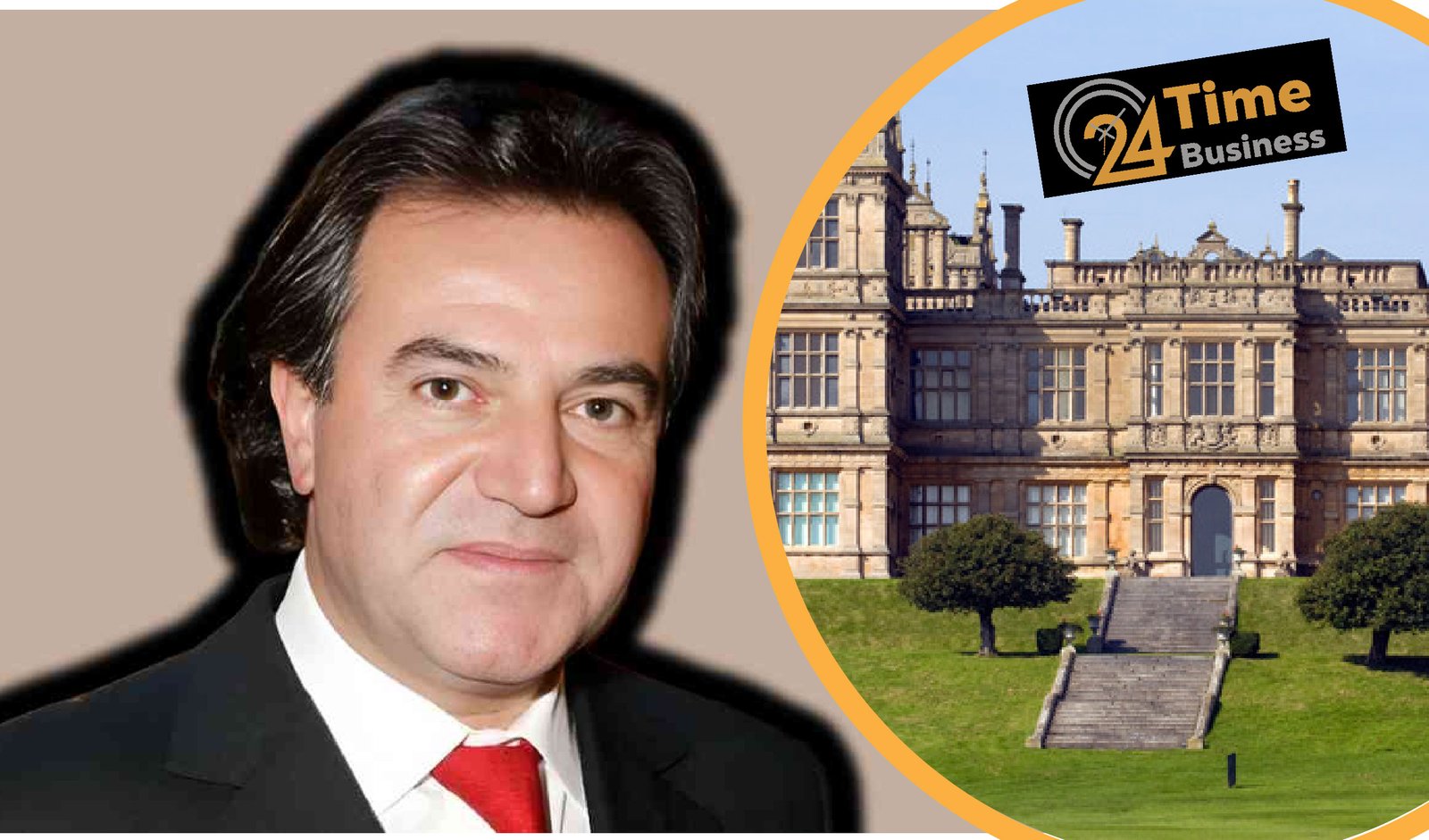
Simon Halabi’s life continues to capture global attention in 2025 because it represents one of the most dramatic rises and falls in modern British business history. Once a billionaire property tycoon controlling some of London’s most prized commercial buildings, Halabi rose to the top of the UK real estate world before losing nearly everything during the 2008 financial crash. His mysterious personality, lavish lifestyle, private family life, and controversial legal history only deepened public fascination. Searches for “Simon Halabi net worth,” “bankruptcy,” “wife,” “sons,” “death,” and “career” remain high because people are intrigued by how a man who built a multibillion-pound empire could face such a rapid collapse. This article explores Halabi’s full journey—from his privileged Syrian upbringing to his London empire, his investments, bankruptcy, legal problems, personal tragedies, and the legacy he leaves behind in the world of property development.
Bio Details: Simon Halabi
| Personal Information | Details |
|---|---|
| Full Name | Bassam Simon Halabi |
| Known As | Simon Halabi |
| Birth Year | August 1958 |
| Age (2025) | 66–67 Years |
| Birthplace | Syria |
| Nationality | Syrian-born British |
| Ethnicity | Middle Eastern |
| Profession | Property Developer, Businessman |
| Famous For | Former billionaire, major London property owner |
| Peak Net Worth (2007) | ~$4.3 Billion |
| Net Worth (2025) | ~ $50 Million (estimated, unverified) |
| Marital Status | Married (reports of disputes) |
| Wife | Urte Halabi (Lithuanian origin) |
| Children | Two sons — Samuel (deceased), Jacob Halabi |
| Parents | Father was a successful businessman |
| Religion | Not publicly confirmed |
| Notable Properties | Aviva Tower, JP Morgan HQ building, Mentmore Towers |
| Legal History | 1998 conviction in France; later acquittals in UK cases |
| Current Status | Private lifestyle, limited public appearances |
Who Is Simon Halabi?
Simon Halabi, born Bassam Simon Halabi, is a Syrian-born businessman who became one of Britain’s most influential and wealthy property magnates. Rising to billionaire status in the early 2000s, he built his empire by acquiring major commercial properties in central London, including corporate headquarters and historic buildings. Known for his bold, high-risk investment style and preference for privacy, Halabi operated quietly behind the scenes while reshaping the London skyline. His journey from billionaire to bankrupt made headlines worldwide, as did ongoing legal battles that followed him for decades. In recent years, Halabi has kept a low profile, but strategic legal victories and ongoing financial interests suggest he remains active, even if far removed from the public spotlight.
Early Life & Family Background
Simon Halabi was born in August 1958 in Syria into a wealthy and business-oriented family. His father was already a successful entrepreneur, giving Simon early exposure to money management, investment strategies, and high-value trade. This upbringing played a crucial role in shaping his ambition and confidence as he later entered global business circles. While little is publicly known about his schooling or early education, sources consistently describe him as someone influenced heavily by family wealth and connections. His move to Europe, and later to the United Kingdom, was fueled by both opportunity and the desire to expand his family’s financial footprint. This early foundation allowed him to take bigger risks than most young businessmen, ultimately helping him establish one of Britain’s most powerful property portfolios.
Arrival in the UK — The Beginning of a Global Business Journey
When Simon Halabi arrived in the United Kingdom, he brought with him a combination of inherited capital, entrepreneurial confidence, and a strong desire to enter the elite business world. Initially involved in various commercial ventures, he quickly recognized the immense profit potential in London’s commercial property market. Using his financial backing, he began forming relationships with brokers, bankers, and business leaders who were instrumental in accessing major deals. Halabi’s entry into real estate development marked the beginning of a new chapter—one where he transitioned from a wealthy businessman to one of Britain’s most influential landlords. His early strategy focused on identifying properties with long-term value, and this method laid the foundation for the empire he would later create.
Building a Property Empire — The Peak of Simon Halabi’s Wealth
By the mid-2000s, Simon Halabi had become one of the most powerful figures in the UK property market. His empire included some of London’s prime commercial buildings, such as the JP Morgan headquarters, the Aviva Tower he purchased for £260 million, and the Old Mutual building. One of his most talked-about investments was his involvement in The Shard, which later became an iconic part of the London skyline. He also acquired Mentmore Towers, a historic estate he intended to transform into a luxury hotel. His portfolio spanned across office blocks, estates, international properties, and high-end commercial spaces. At his peak, Halabi was ranked among the wealthiest individuals in Britain, and his influence extended beyond real estate into finance, international business, and luxury development.
Investment Strategy — How Halabi Built Wealth So Quickly
Simon Halabi’s rise to wealth was driven by an aggressive investment strategy focused on high-value commercial properties in prestigious locations. He often used high-leverage financing, borrowing heavily to secure multimillion-pound assets with strong rental income potential. This allowed him to control vast real estate holdings while using relatively little of his own capital. He targeted undervalued buildings in central London, anticipating long-term price appreciation and tenant stability from blue-chip companies. Halabi was known for his ability to negotiate major deals and spot opportunities others overlooked. However, while his bold strategy fueled rapid expansion, it also left him deeply exposed when the financial crisis hit. His reliance on debt ultimately became the biggest risk of his empire.
The 2008 Financial Crisis — A Billionaire Empire Collapses
The global financial crisis of 2008 was a turning point that shattered Simon Halabi’s billion-pound empire. As commercial property values fell worldwide, the heavily leveraged loans he relied on became impossible to service. With banks demanding repayment and asset values dropping sharply, Halabi’s once-dominant portfolio quickly became unstable. In 2010, he was declared bankrupt over a £56.3 million loan, marking one of the most dramatic financial collapses in British real estate history. Many of his signature properties were sold off by administrators, erasing decades of financial growth. His downfall became a public lesson in the dangers of overleveraging, especially in volatile markets. Overnight, the man once celebrated as a visionary investor became a cautionary tale of excessive financial risk.
Legal Troubles & Criminal Convictions — Controversies That Followed Him
Beyond financial challenges, Simon Halabi’s public image was severely damaged by legal controversies. In 1998, a French court convicted him of rape, resulting in a suspended sentence and his placement on France’s sex offenders list. Years later, additional accusations surfaced regarding his failure to inform authorities of travel movements, which he was legally required to report due to the earlier conviction. Though he was acquitted of these later charges in 2024 due to insufficient evidence, the surrounding publicity reignited public debates about accountability and reputation. These legal issues, combined with his financial collapse, created a complex portrait of a man whose successes and controversies were deeply intertwined, shaping how the public and media came to view him.
Personal Life — Marriage, Children & Tragedy
Simon Halabi’s personal life has included both privilege and profound tragedy. He married Urte, a Lithuanian-born woman, and together they had two sons, Samuel and Jacob. The family enjoyed immense wealth during Halabi’s peak years, but their private world was devastated in 2003 when their young son Samuel drowned in a swimming pool accident in France. The tragedy left a deep emotional impact on the family. Reports later emerged suggesting marital disputes and possible divorce proceedings, though details remained mostly private due to Halabi’s secretive lifestyle. Despite his public controversies, those close to him describe a man shaped by loss, ambition, and resilience—qualities that influenced both his personal decisions and business career.
Mentmore Towers — The Ambitious Dream That Never Came True
One of Simon Halabi’s most ambitious projects was Mentmore Towers, the historic Grade I-listed estate in Buckinghamshire. Purchased in 1997, Halabi planned to transform it into a luxurious six-star hotel featuring world-class amenities. The project received planning approval and was considered one of the most exciting redevelopment ideas of its time. However, the 2008 financial crisis halted all progress. With funds disappearing and debts mounting, the estate fell into disrepair, becoming a haunting symbol of Halabi’s decline. Once envisioned as a crown jewel in his portfolio, Mentmore Towers now stands as a reminder of how quickly even grand plans can collapse under financial pressure.
Yacht, Lifestyle & Public Image — The Life of a Billionaire Before the Fall
During his peak years, Simon Halabi lived an extravagant lifestyle that reflected his billionaire status. He owned a 130-foot luxury yacht, a fleet of high-end cars including Bentleys and Rolls-Royces, and multiple international properties. Despite this opulence, Halabi maintained an air of mystery, rarely giving interviews or appearing at public events. His private nature added to the intrigue surrounding him, turning him into a figure both admired and scrutinized. This contrast between luxury and secrecy shaped his public persona. For many, he became the definition of a reclusive tycoon—powerful, wealthy, and enigmatic. Yet his lavish lifestyle also drew criticism, especially after the financial crash exposed the fragility of his wealth.
Legal Victory in Jersey — A Major Turning Point
In recent years, Simon Halabi won a significant legal battle in Jersey involving the Ironzar II Trust. The case centered on whether trustees or executors had priority over certain liens and financial claims. The court ultimately ruled in Halabi’s favour, establishing a precedent that could influence trust law for years to come. This victory helped restore some of his professional credibility, demonstrating that he still possessed the legal and strategic expertise that once defined his business success. While it did not fully rebuild his former empire, the ruling marked a rare moment of public vindication after decades of legal setbacks and controversies.
Net Worth Over the Years
Simon Halabi’s net worth has undergone one of the most dramatic transformations in UK financial history.
– 2007: Estimated at $4.3 billion, placing him among the world’s wealthiest.
– 2010: Declared bankrupt due to defaults on massive loans.
– Post-2010: Gradual rebuilding through private investments.
– 2025: Estimated around $50 million, though unverified.
His financial journey highlights both the power and the danger of high-leverage investment strategies. Although his wealth today is modest compared to his peak, the fact that he remains financially active after such a collapse speaks to his persistence and business acumen.
Business Philosophy — Risk, Vision & Controversy
Simon Halabi’s business philosophy was built on ambition, bold decision-making, and strategic risk-taking. He believed in acquiring prime commercial properties in central London, often before they reached peak market value. His approach relied heavily on debt financing, enabling rapid expansion but also creating enormous liabilities. Halabi excelled at negotiating deals and identifying undervalued assets. However, his weakness was overexposure to market volatility, which became clear during the 2008 crash. His story serves as a powerful lesson to modern investors: vision and ambition must be balanced with financial caution and diversified planning.
Media Coverage & Public Perception — From Billionaire Icon to Cautionary Tale
Media portrayal of Simon Halabi shifted dramatically over the years. In the early 2000s, he was celebrated as a reclusive billionaire shaping London’s property market through quiet but powerful influence. Headlines highlighted his wealth, his deals, and his luxurious lifestyle. After the financial crash, however, the tone changed sharply. Coverage focused on his bankruptcy, leveraged debts, abandoned projects, and legal troubles. His past criminal conviction resurfaced in the media, further altering public perception. By the 2020s, Halabi had become a divisive figure—admired by some for his business skills but criticized by others for controversies and financial missteps. The media played a major role in shaping this complex narrative.
Lessons from Simon Halabi’s Rise & Fall
Simon Halabi’s story offers several important lessons for business leaders and investors. First, high-leverage financing can accelerate growth but becomes dangerous during economic downturns. Second, diversification is essential for long-term stability. Third, public reputation matters—legal issues and scandals can overshadow business achievements. Fourth, transparency and accountability are crucial when controlling large financial portfolios. Finally, resilience is key; even after catastrophic loss, Halabi demonstrated a capacity to fight legal battles and maintain some financial standing. His life illustrates both the opportunities and risks of operating at the highest levels of global business.
Where Is Simon Halabi Now?
In recent years, Simon Halabi has maintained a relatively low profile. He no longer appears in major property rankings, and his business activities are far more private than during his peak years. Legal matters have continued to arise, but his victory in the Jersey trust case suggests he remains actively involved in financial disputes and asset protection. It is believed he still engages in selective investments, though details remain undisclosed. Reports suggest that he now prioritizes family life, personal privacy, and rebuilding stability rather than pursuing the high-profile ventures of his earlier career.
Legacy & Cultural Impact — How Halabi’s Story Shaped UK Property History
Simon Halabi’s legacy is complex. He played a major role in reshaping London’s commercial real estate landscape, demonstrating how private individuals could influence major city developments. His billionaire rise showcased the potential of strategic property investment, while his financial collapse highlighted the dangers of overleveraging. His legal history remains controversial, shaping public discussions about wealth, accountability, and privilege. In academic and business circles, Halabi’s story is often used as a case study in risk management. Whether admired or criticized, he remains one of the most talked-about figures in the modern history of British property development.
Conclusion
The life of Simon Halabi stands as one of the most dramatic and complex business stories of the last several decades. From his billionaire status and ownership of iconic London buildings to his collapse during the financial crisis and ongoing legal battles, his journey reflects both the heights of ambition and the consequences of unchecked risk. Personal tragedy, public controversy, and financial decline shaped his later years, yet his resilience and ability to remain relevant in legal and financial circles demonstrate a powerful will to endure. Whether viewed as a visionary or a cautionary tale, Simon Halabi’s story continues to fascinate and teach lessons to entrepreneurs, investors, and historians around the world.
FAQs About Simon Halabi
1. Who is Simon Halabi?
Simon Halabi is a Syrian-born British property developer who became one of the richest men in the UK in the mid-2000s, owning major London landmarks before losing much of his wealth during the 2008 financial crisis.
2. What happened to Simon Halabi’s fortune?
Halabi’s billion-dollar property empire collapsed after the 2008 financial crisis due to heavy leverage. He was declared bankrupt in 2010, and most of his prime assets were sold to repay debts.
3. What is Simon Halabi’s net worth in 2025?
As of 2025, Simon Halabi’s estimated net worth is around $50 million, although this figure is unverified and significantly lower than his $4.3 billion peak in 2007.
4. Is Simon Halabi still alive?
Yes, Simon Halabi is still alive. There are no credible reports confirming his death, and he continues to maintain a low-profile private life.
5. Who is Simon Halabi’s wife?
Simon Halabi is married to Urte Halabi, a Lithuanian-born woman. The couple had two sons, Samuel (who tragically passed away) and Jacob. Their relationship has faced reported legal disputes in recent years.
People See More: Helen Soby: Life, Marriage, Divorce, Daughters & Her Private Journey Beyond Fame

Who Is Tiffany Jonny Faatz? Name Origin And Surname History Explained

Don Baskin Net Worth Update: The Story Behind His Growing Wealth

Who Is Joanna Sterling Miller? Donald Sterling’s Daughter Explained

Roger Nores’ Role In Liam Payne’s Death: What You Need To Know

Who Is Otelia Cox? The Private Life Of Tony Cox’s Long-Time Partner

Who Is Ralph Macfadyen? The Model Son Of Matthew Macfadyen And Keeley Hawes Explained

Who Is Damian Schnabel? Inside The Life, Career, And Net Worth Of Amanda Redman’s Husband

James Corden’s $70 Million Net Worth Explained: TV Success, Carpool Karaoke & Investments

Sucker Punch: A Deep Dive Into Zack Snyder’s Visually Stunning Fantasy

Fin Affleck: The Teen Who Embraced Identity, Style, And Family Support

Who Is Dora Zbierlund? The Untold Story of Jeffrey Tambor’s Ex-Wife and 1980s TV Actress

Who Is Jonathan Tham? The Two Doctors Making A Difference Beyond Fame

Dounne Alexander: The Inspiring Herbalist Who Transformed Britain’s Natural Health Movement

Guy Willison Biography (2025): Age, Wife, Illness Update, Net Worth & Motorcycle Legacy

Meet Spencer McMillan: Life, Family, Art & Legacy Of Robbie Coltrane’s Eldest Child

Who Is Natasha Haye? Inside Her Marriage, 30-Second Divorce & Life After David Haye

Claire Le Marquand: Visionary Designer & Wife Of Mike Skinner

Marie Fargus: Her Life, Tragic Death & The True Story Behind The Victoria Tribute

Mungo Denison: The Private Life, Career, And Love Story Of Charlotte Bellamy’s Husband

What Is eTarget Limited? Why Its Name Appears On Royal Mail Parcels Explained
-
 Celebrity4 months ago
Who Is Dora Zbierlund? The Untold Story of Jeffrey Tambor’s Ex-Wife and 1980s TV Actress
-
 Biography4 months ago
Who Is Jonathan Tham? The Two Doctors Making A Difference Beyond Fame
-
 Celebrity4 months ago
Dounne Alexander: The Inspiring Herbalist Who Transformed Britain’s Natural Health Movement
-
 Celebrity3 months ago
Guy Willison Biography (2025): Age, Wife, Illness Update, Net Worth & Motorcycle Legacy